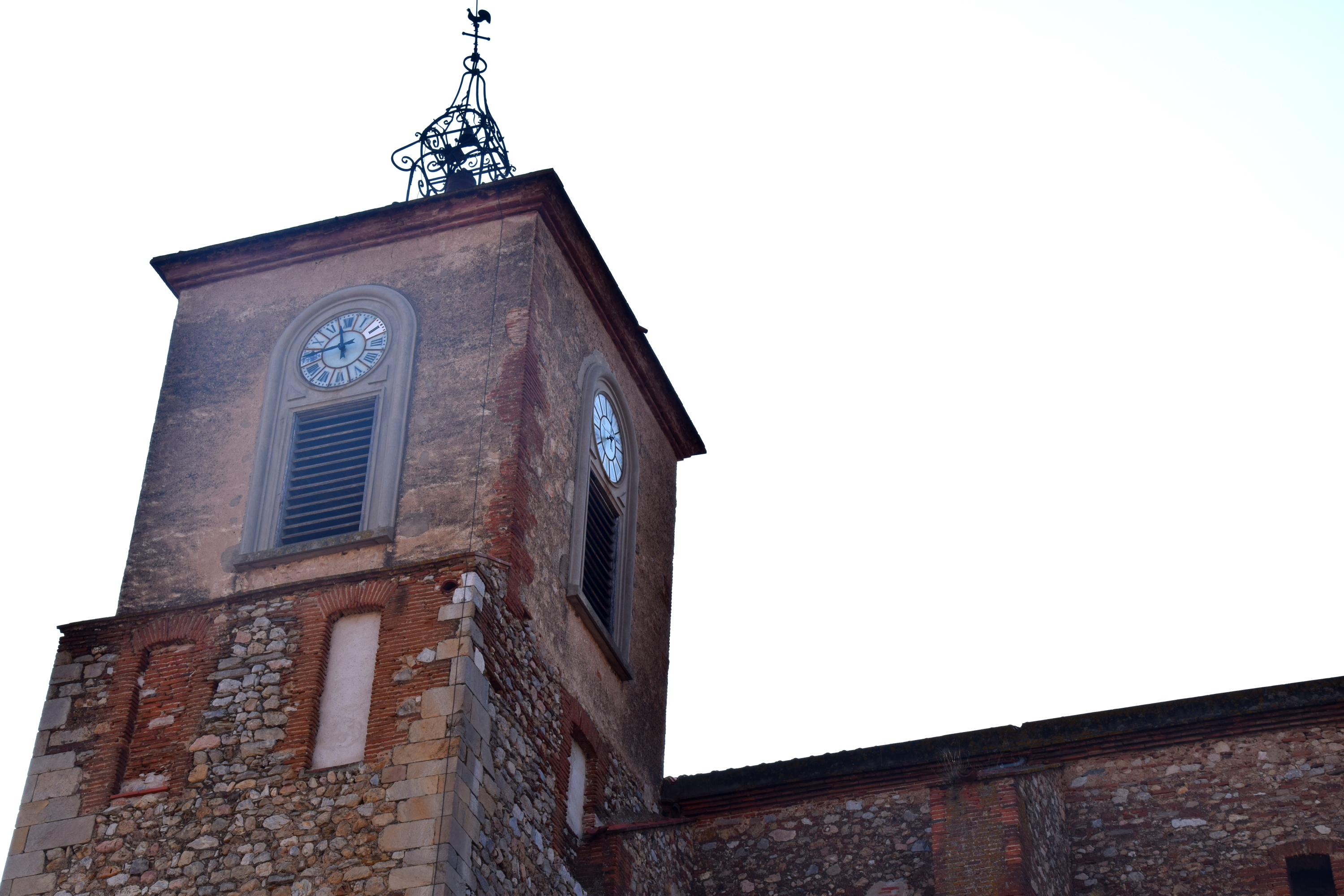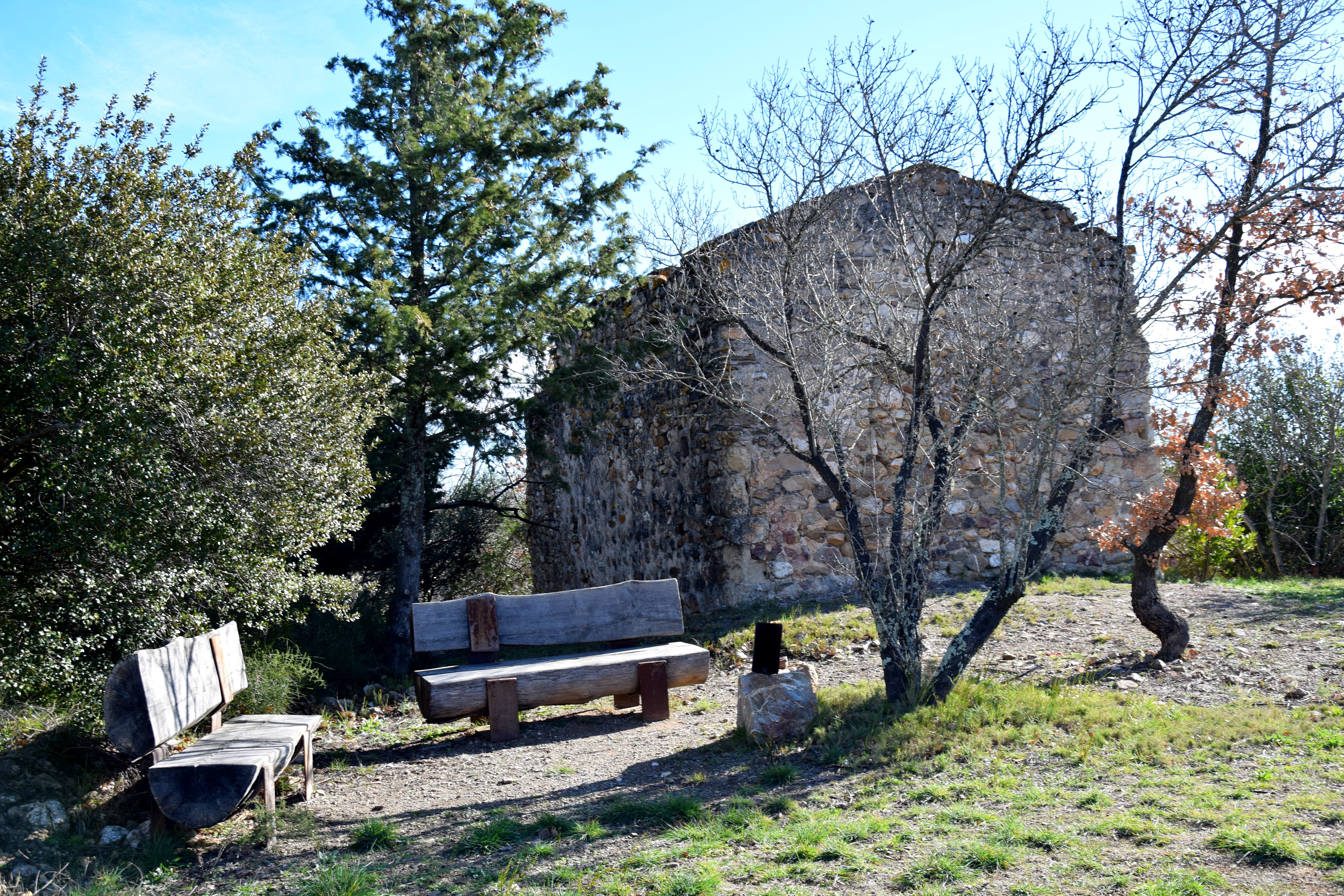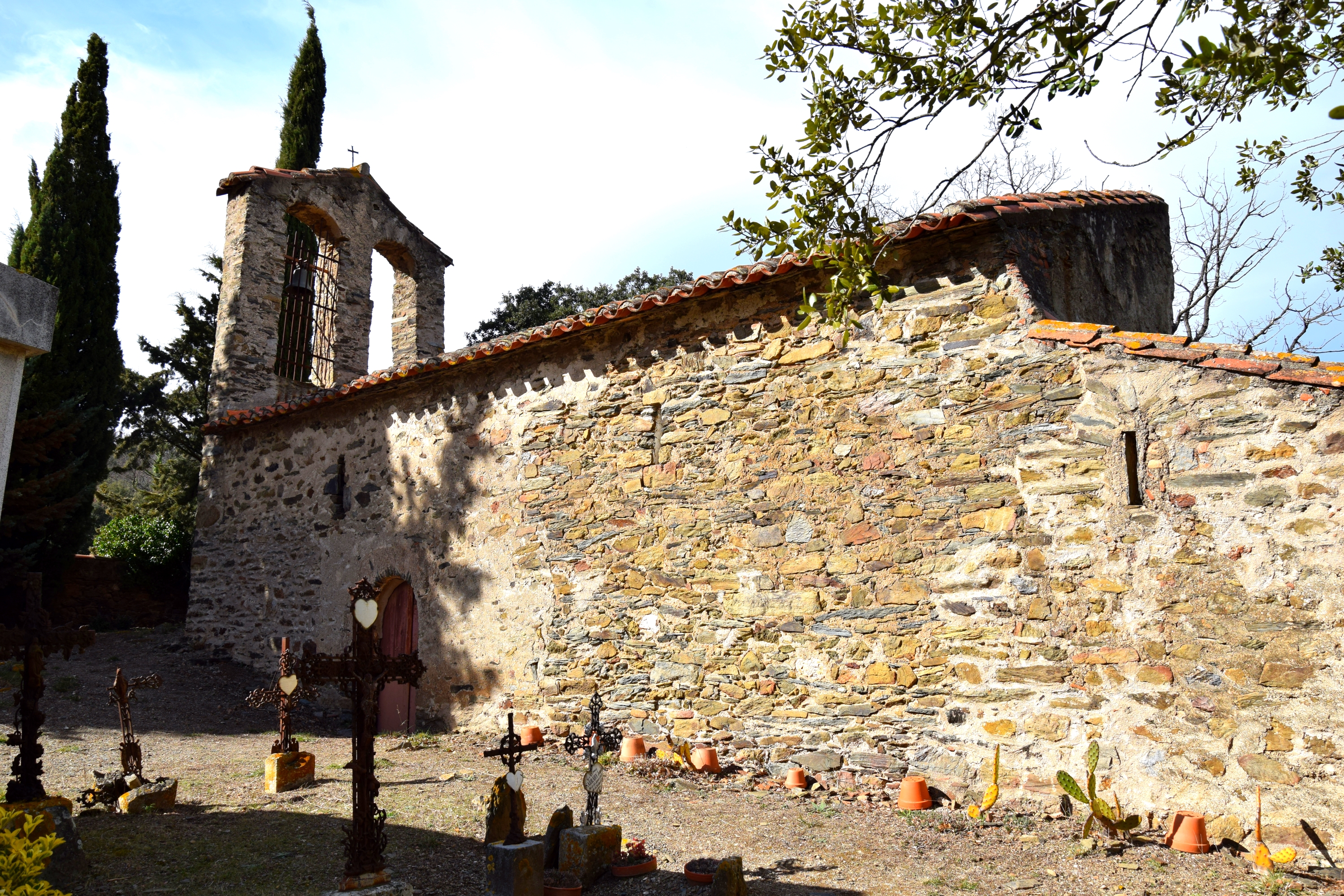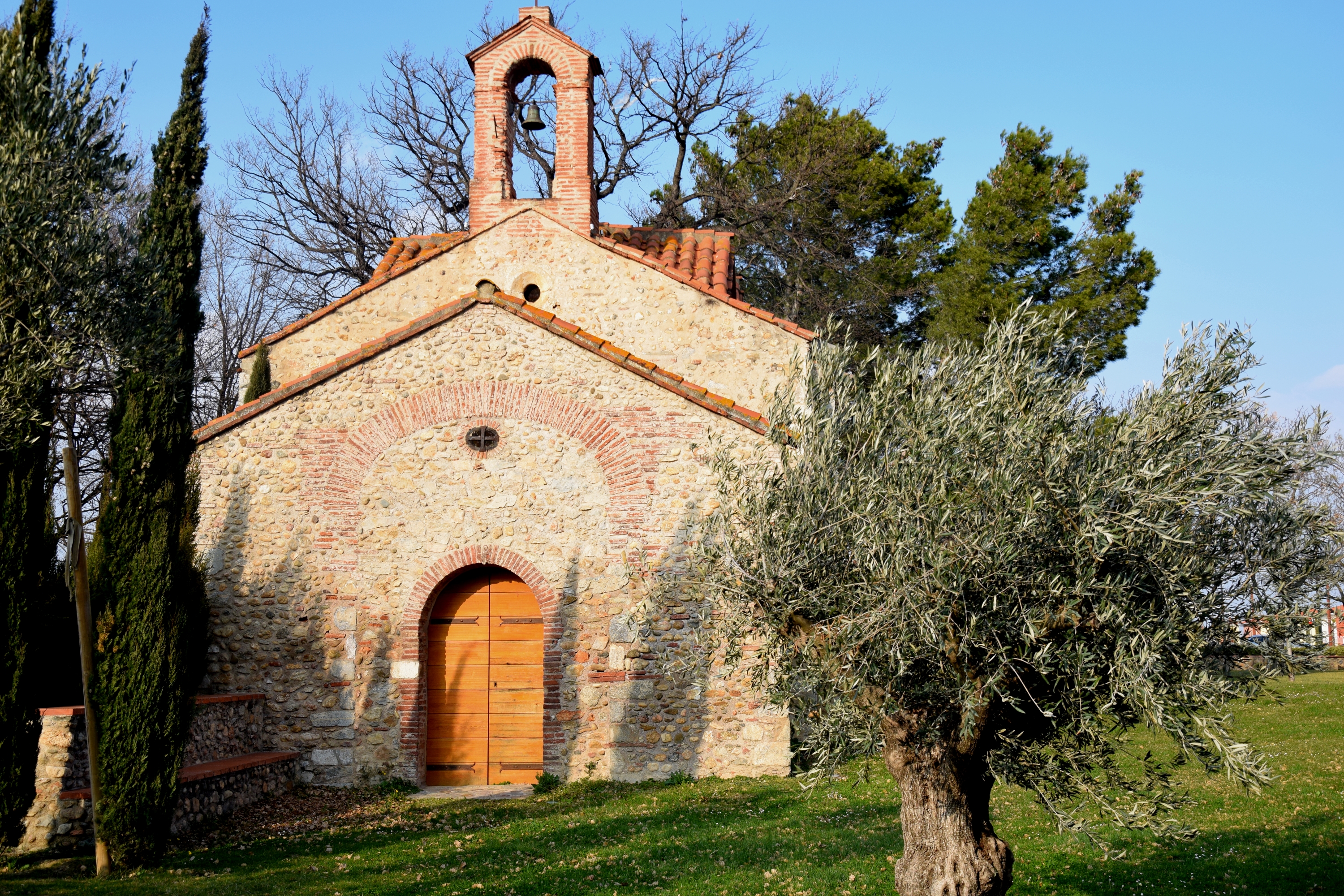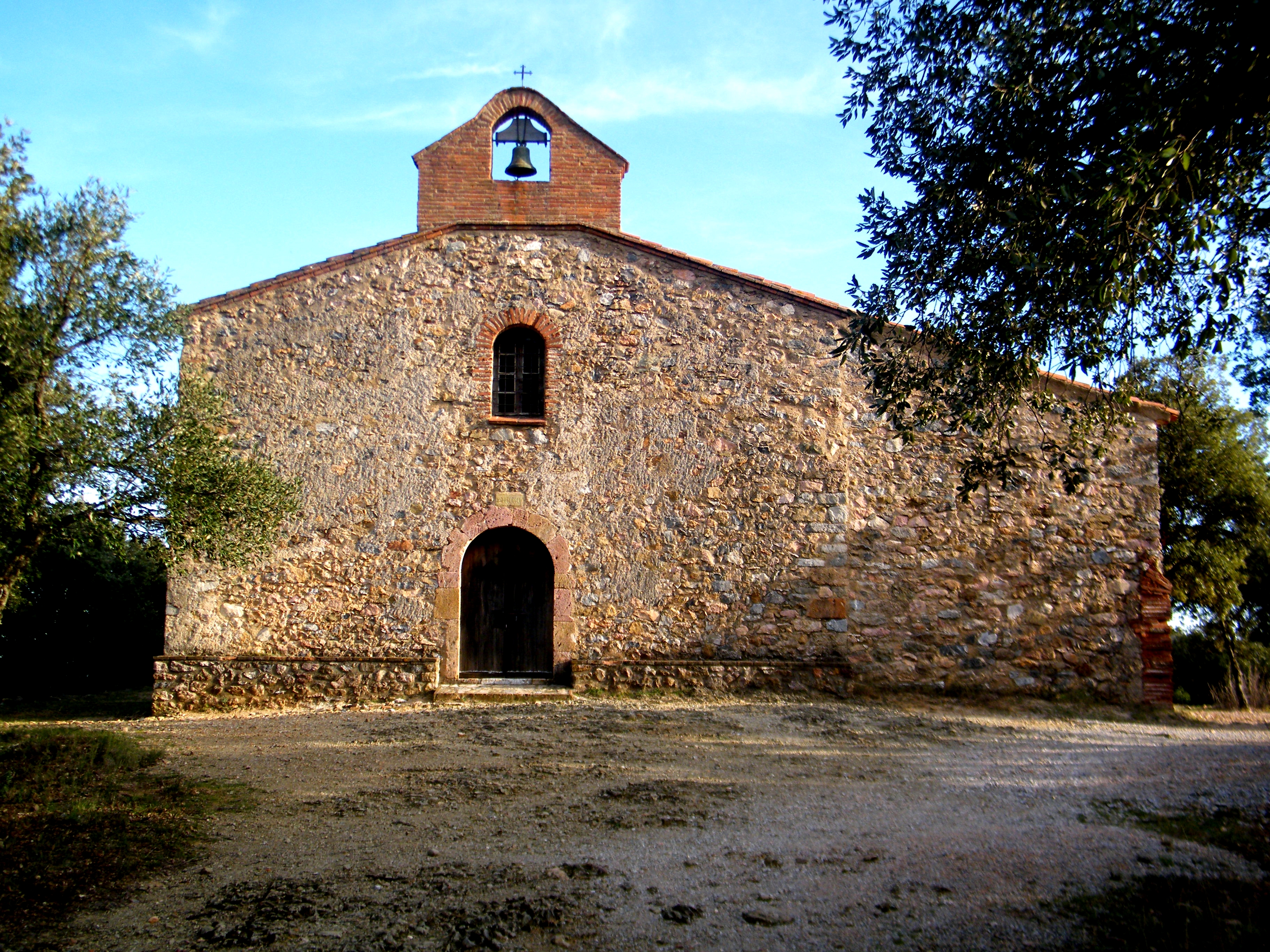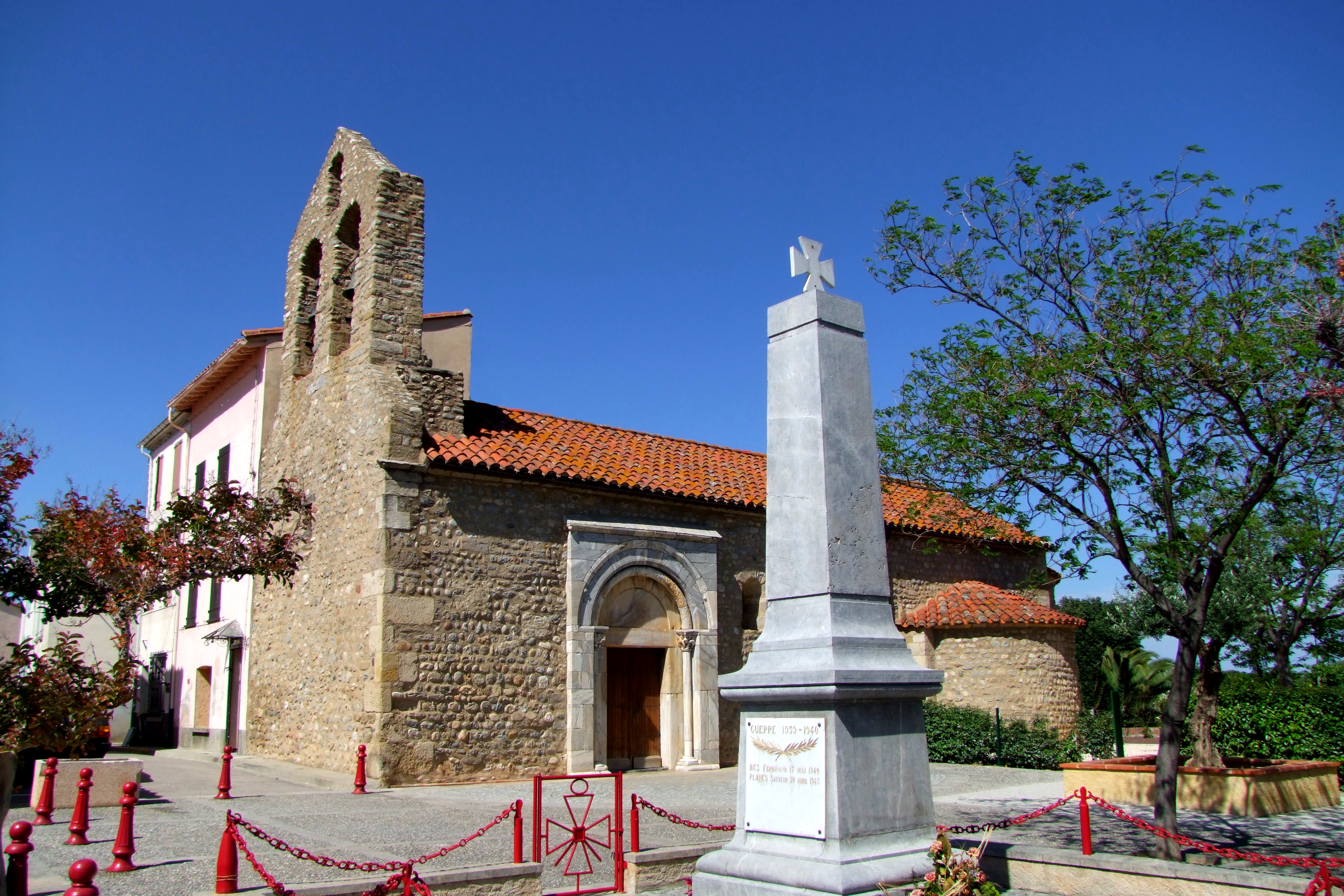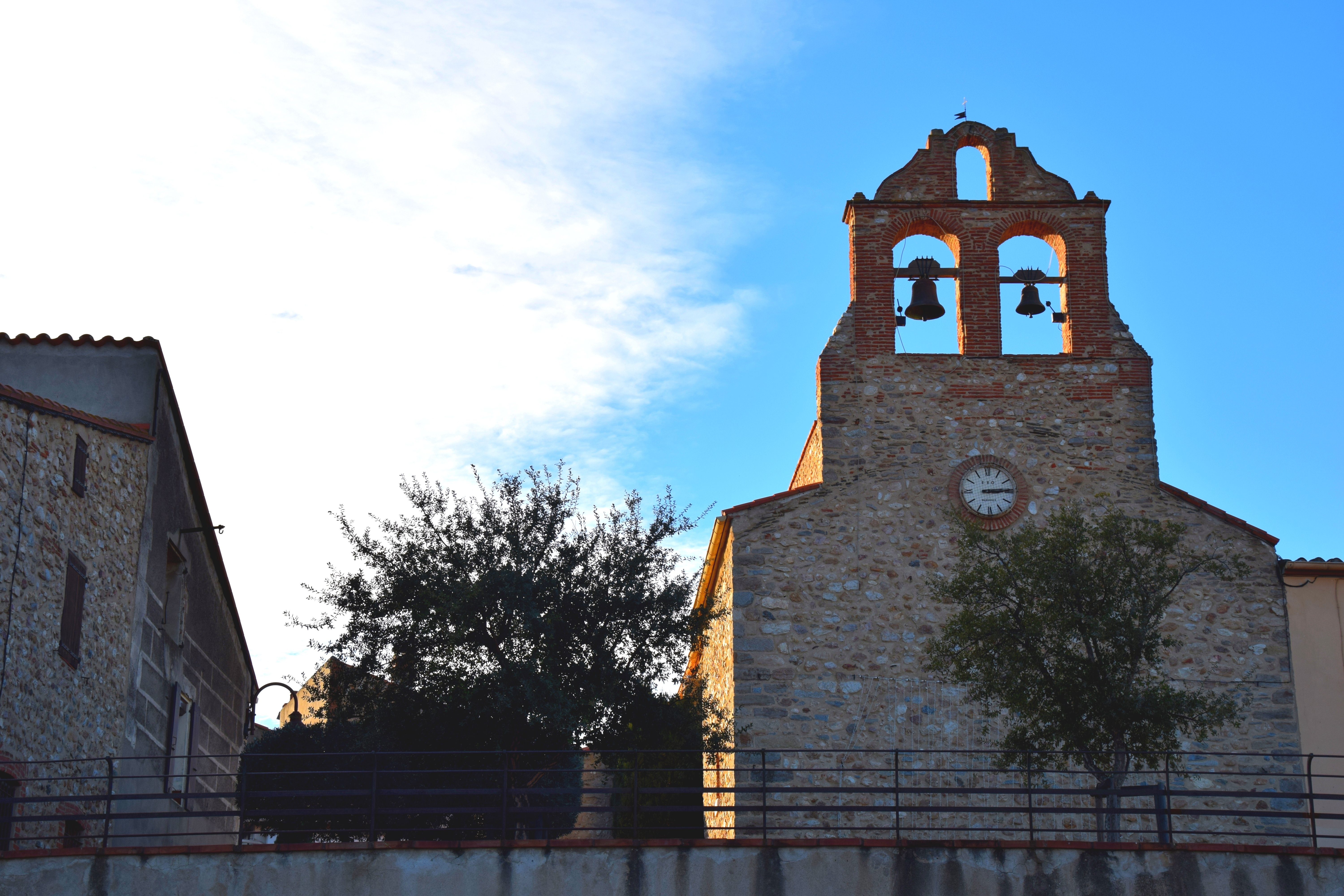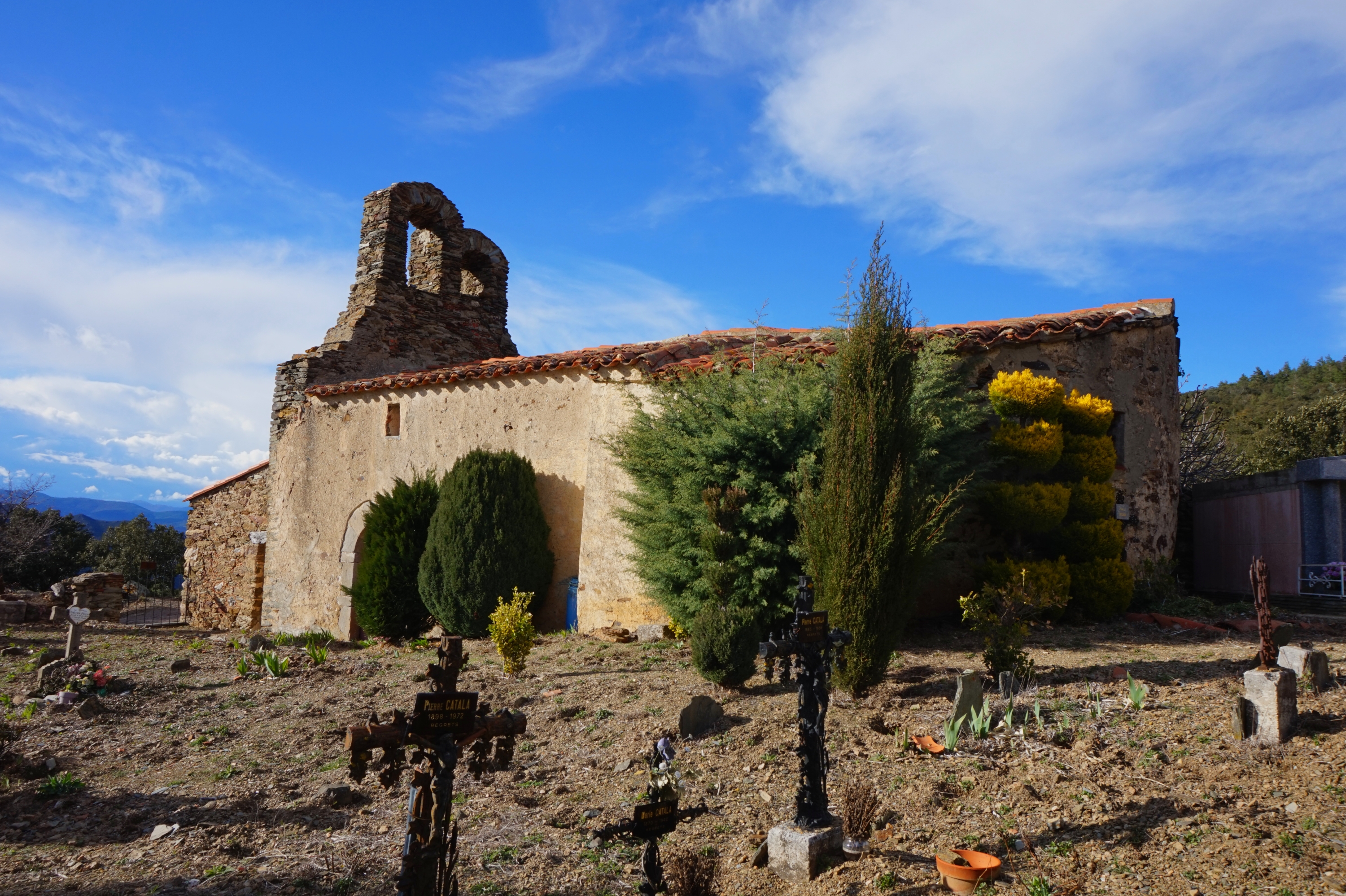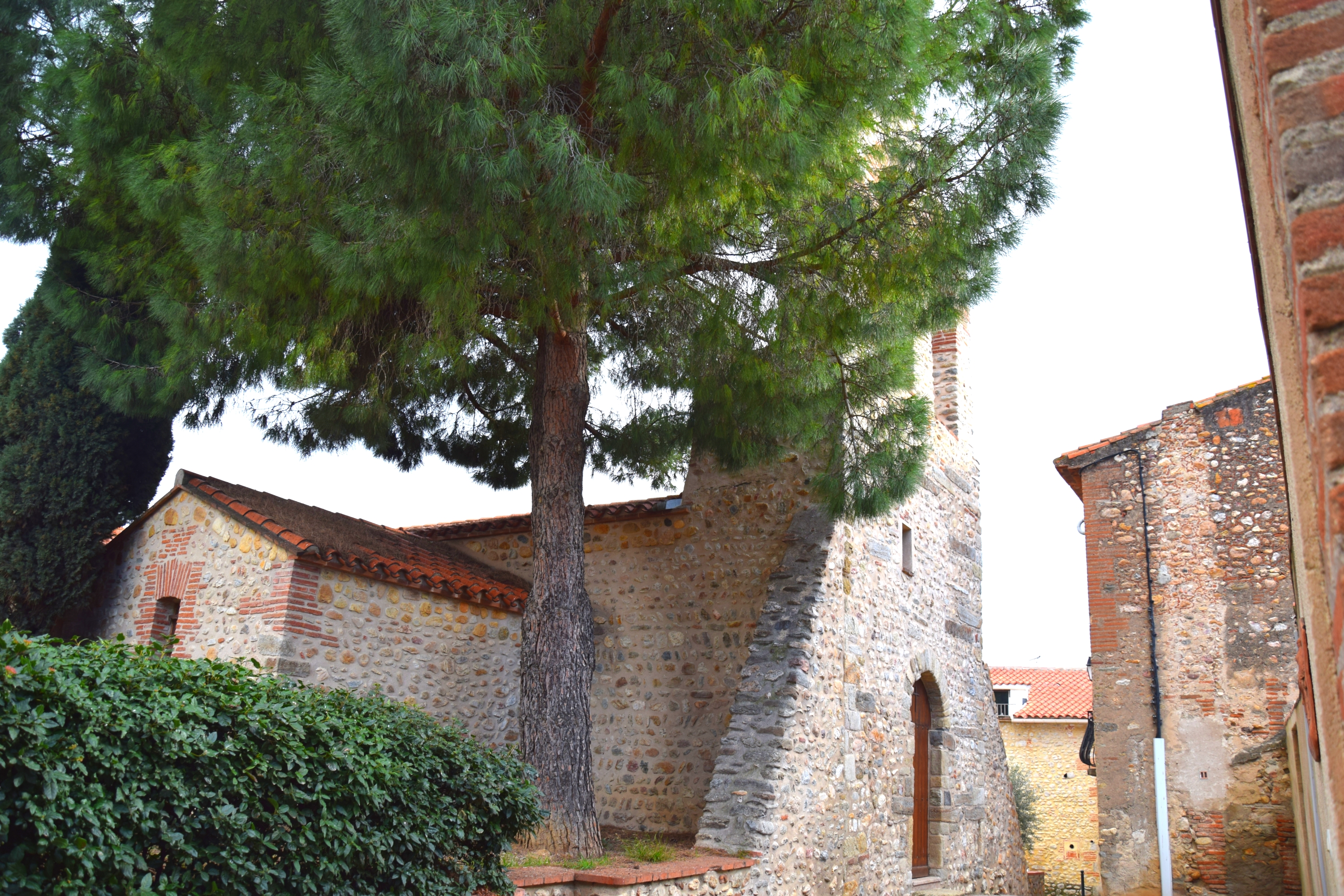
On foot, by car or by bike, alone, with family or friends, walking through the towns and villages of the Aspres is the best way to discover the rich and varied heritage of our region.
During your walks, you will discover small wonders, there a Romanesque church lost in the middle of a suberaie, elsewhere a typical village with painted genoises, or a medieval village classified as one of the Most Beautiful Villages in France.
Wander around, get lost and be amazed!
Heritage
Page 1 of 1
CHAPELLE DE LA PIETAT
This vestige from the gothic art was created at the begening of the 15th century on one of the five Royal ways of Thuir, by Pierre AYBRI and his wife. In spite of the fact that it’s a modest construction, this site wins it prestige thanks to its amazing stones.

ERMITAGE DE SAINT SÉBASTIEN
The St Sebastian’s Chapel of Fourques has a very strange story. It appears for the first time in 1706. At these time, each village wanted to have an hermit, that’s why they chose St Sébastien. During the XIXth century, it was bought by François Ville, then by other people until now. Today this chapel belongs […]

CHAPELLE SAINT VINCENT
The territory of Fourques gets a church ruined St Vincent which seems to date from the préroman time. Located in the northeast of the village, this church is small and gets an antic cheviot and an apse in triumphal arche.

NOTRE DAME DEL COLL
This church was an ancient parish. It was mentionned for the first time in 975, then in 1229, in 1380 and in 1688. In 1979, this hermitage was completely given up. One part was discharged and it gets a magnificient altarpiece from the XVIIth century.

EGLISE SAINT ANDRE
This Church is dedicated to St André and was created on the first part of the XVth century. It’s a Gothic work with a big steeple. There’s few furniture like some statues and a Christ. But it gets one famous particularity, infrequent, it’s strengthened.

SITE HISTORIQUE DE LA BATAILLE DU BOULOU
On the Pla del Rey, at 200m high shared between Passa, Tresserre and Le Boulou, there is a course which describe the fight between Spanishes and Frenches in October 1793. A viewpoint indicator explain everything about the Le Boulou’s battle.

EGLISE SAINTE MARIE
It is a small Romanesque building with a single nave whose particularity is a trefoil plan bedside, which is relatively rare in the region. The portal is in white marble veined with gray, a conventional production of Romanesque workshops in the Roussillon. The vault is in the cradle. The interior shows a holy water font, […]

EGLISE SAINT JULIEN
This church , on Romanic style, is dedicated to St Julien and St Basselisse. It gets an unic nave, a semicircular apse, a cheviot from the XIIIth century and a steeple.

EGLISE SAINT ASSISCLE
Consecrated to Ste Assiscle and Ste Victoire, it gets a unic nave, and an apse. It was remained duri,g the XVIIIth century, with the add of some lateral chapels. It gets a portal, an altarpiece classified as a historical monument, some other altarpieces and 2 paintings from the XVIIIth century.

CHAPELLE SAINT AMANS
It’s a small edifice composed with a unic nave topped by a vault. Its apse is semicircular and with a tiny sacristy. The front is topped by a little steeple. There is a unic window on the South which lights up the site. This chapel is amazing by it exterior aspect but above all by […]

CHAPELLE SAINT MARTIN DE LA ROCA
It’s a Roman church composed by a nave and a apse semicircular. Its cheviot is adorned by blinds arches. It was extended on the XIVth century with a second nave on the south. The chapel measure 6m50 by 9m60. Its history begin in 1259. This chapel was used to maintain a religious link between each […]

EGLISE SAINT PONS
This hamlet gets a chapel consecrated to St Pons from the XIIIrd century. Constituated by a nave, and a large apse built on another time. The portal was made by grey stones, and the steeple is above the western wall. In this chapel, there is a very strange custom, is that put oil on ears. […]

EGLISE SAINTE COLOMBE DE LAS ILLAS
Ste Colombe is a small edifice that the first nave was expented on the north by a second nave during the XIVth or XVth century. The cheviot was created at this time. It gets a door overhang by an arche on the south’s wall. The steeple gets two arches, it’s above the western front.

EGLISE SAINT SATURNIN
The Church is dedicated to St Saturnin, it was built in the PréRoman art from the Xth century and modified in XIIth century. It gets a unic nave cut in 2 parts by an arche and she gets an semicircular apse very deep.

EGLISE SAINT MARTIN
The church of Fourques was a possession of the Arles-sur-tech abbey and was dedicated to St Martin. The Church was built in Roman style but it was mofified on the XIVth and XVth century. It gets 3 altarpieces from the XVIIth century. In 1188, an abbot order to build a “cellera”, a barrier called “Cas’tell”.

EGLISE SAINT FELIX
The parish church of St Peter and St Felix Calmeilles dates from the twelfth century. It has a single nave, a vaulted apse is semi-circular, according to a conventional scheme of Romanesque art in Roussillon. Externally, we must not miss the decorations of the bedside. Inside, the church contains a statue of the Virgin and […]

EGLISE SAINT FRUCTUEUX
The Romanesque village church dates from the eleventh century, the pink marble portal keeps on its pillars, the memory of the mother of a lord of the village. Dedicated to St Fruitful, it has an altarpiece of the main altar made by Trémullas Lazarus (1644). Around 1425, twelve tables assembled in one altarpiece were ordered […]

EGLISE SAINT VINCENT
This Roman Church gets a unic nave and a semicircular apse. It was modified in the XIVth century and XVth century with the add of 2 chapels on each parts of the nave. The church was modified twice in 1735 and in 1767. You can still see a marble Christian cross, and a chalice from […]

EGLISE SAINT SATURNIN
The St Saturnin church in Tresserre was refered in the XIIth century. It’s in Roman style, with a unic nave and a semicircular apse. This Church gets a altarpiece recently restored. This altarpiece is in baroque art, made with wood and dates from 1745.

EGLISE SAINT NAZAIRE
The St Nazaire church of Tordères is un edifice from the Xth century. Its architecture is a blend of differents transformations and expansions over the centuries. The church gets an altarpiece from the begining of the XVIIIth century dedicated to St Nazaire and St Celse, recently restored.

EGLISE SAINT MARTIN
This church is dedicated to St Martin, it gets a unic nef. It contains still today an amazing Christ of the XVIIth century and an altarpiecefrom the XVIIIth century. It was modified in 1758.

EGLISE SAINT PIERRE
The antic church is in roman art. Dedicated to St Pierre, it gets a furniture from the XVIIIth century very interesting.

EGLISE NOTRE DAME DE LA VICTOIRE
The Ste Marie de la Victoire’s Church is an edifice built in 1785. But first it was a Roman Church dedicated to St Pierre. The saints changed in 1816, it stays some things of the first church. She gets a statue in lead from the XIIIth century, a holy water font from 1708, 2 steeples […]

EGLISE SAINT JEAN L’EVANGELISTE
It’s a chapel dedicated to St Jean, the evangelist. The St Jean’s Church gets an unic nave, a holly water font in white marbel. This was made between 1160 and 1170 with an ancient column from the Sorede’s convent.

EGLISE SAINTE COLOMBE
Ste Colombe church gets Roman origins. It gets a unic nave, a semicircular apse. The church from the exterior is very beautiful and the interior gets some valuables like statues, Christian cross and a Christ’s bust from the XVth century.

ERMITAGE SAINT LUC DE PUIGRODON
Located at 204 m hight, the St Luc de Puigrodon’s Hermitage is a religious edifice from the XIth century. Then, it was given up for the benefit of Passa’s Church, whose was more important.

PRIEURE DU MONASTIR DEL CAMP
Monastir del Camp in Catalan means ‘The Monastery Camp’, in reference to the victory of Charlemagne over the Saracens. The ‘Monastery Camp’ belonged to the community of Thuir. Founded at the request of Charlemagne after his victory against the Saracens, he actually welcomed the community ‘Del Camp’ on the orders of Artal II, Bishop of […]

CHATEAU DE CASTELNOU
Set in the Aspres at the foot of the Mount Canigou, this 10th century medieval castle looks over one of the “Most Beautiful Villages in France”. It was built as a capital for the Viscounty of the Vallespir.

Page 1 of 1